@Jesus is Lord -- that was a good, thought-provoking video.
Welcome!
By registering with us, you'll be able to discuss, share and private message with other members of our community.
SignUp Now!You are using an out of date browser. It may not display this or other websites correctly.
You should upgrade or use an alternative browser.
You should upgrade or use an alternative browser.
Anihilationism
- Thread starter Sosthenes
- Start date

Jesus_is_LORD
Loyal
- Joined
- Nov 10, 2015
- Messages
- 2,982
However, that is wrongly translated. Paul tells us that the gift of God is eternal life. Where is that gift ever promised to unbelievers
Tell me more. I want to understand your more clearly.
Do you find that Christians are saying that unbelievers are expected to have spiritual gifts?
Jesus_is_LORD
Loyal
- Joined
- Nov 10, 2015
- Messages
- 2,982
@Jesus is Lord -- that was a good, thought-provoking video.
Amen, I'm enjoying the audio book. I'll send you the link in a PM.

Butch5
Active
- Joined
- Nov 13, 2019
- Messages
- 3,355
Hi,Tell me more. I want to understand your more clearly.
Do you find that Christians are saying that unbelievers are expected to have spiritual gifts?
What I'm saying is that the Greek word, aion, and the Hebrew word, olam, are wrongly translated as forever. Jesus and the apostles make clear statements that they end. Something that ends cannot be forever.
Regarding the gift of God, Paul said that the wages of sin is death and that the gift of God is eternal life. If someone is going to be tormented in Hell forever, they must live forever. However, the gift of God, which is eternal life is given to believers not unbelievers. If an unbeliever doesnt receive God's gift of eternal life how can they be tormented forever?
Jesus_is_LORD
Loyal
- Joined
- Nov 10, 2015
- Messages
- 2,982
Hi,
What I'm saying is that the Greek word, aion, and the Hebrew word, olam, are wrongly translated as forever. Jesus and the apostles make clear statements that they end. Something that ends cannot be forever.
Regarding the gift of God, Paul said that the wages of sin is death and that the gift of God is eternal life. If someone is going to be tormented in Hell forever, they must live forever. However, the gift of God, which is eternal life is given to believers not unbelievers. If an unbeliever doesnt receive God's gift of eternal life how can they be tormented forever?
Thanks for the clarification, thank you.
I'll touch on your second point.
So if I understand you correctly, what you are saying is :
-------------------------------------------------------------------------------
(premise) the gifts of the spirit is eternal
(premise) believers receive these eternal gifts
(additionally) unbelievers do not receive the eternal gifts
(conclusion) therefore nonbelievers are cannot be eternal.
-------------------------------------------------------------------------------
Is that what you are saying? If so, the logical reasoning is not the strongest.
It would be like saying:
-------------------------------------------------------------------------------
(premise) All As are B
(premise) All Cs have As
(additionally) Ds do not have As
(conclusion) therefore Ds cannot be B
-------------------------------------------------------------------------------
Which is not logically correct.
Put another way, it would be like saying
-------------------------------------------------------------------------------
(premise) All Ice Cream is sweet
(premise) All girls have ice cream
(additionally) Boys do not have ice cream
(conclusion) therefore Boys don't eat anything sweet
-------------------------------------------------------------------------------
Jesus_is_LORD
Loyal
- Joined
- Nov 10, 2015
- Messages
- 2,982
Thanks for the clarification, thank you.
I'll touch on your second point.
So if I understand you correctly, what you are saying is :
-------------------------------------------------------------------------------
(premise) the gifts of the spirit is eternal
(premise) believers receive these eternal gifts
(additionally) unbelievers do not receive the eternal gifts
(conclusion) therefore nonbelievers are cannot be eternal.
-------------------------------------------------------------------------------
Is that what you are saying? If so, the logical reasoning is not the strongest.
It would be like saying:
-------------------------------------------------------------------------------
(premise) All As are B
(premise) All Cs have As
(additionally) Ds do not have As
(conclusion) therefore Ds cannot be B
-------------------------------------------------------------------------------
Which is not logically correct.
Put another way, it would be like saying
-------------------------------------------------------------------------------
(premise) All Ice Cream is sweet
(premise) All girls have ice cream
(additionally) Boys do not have ice cream
(conclusion) therefore Boys don't eat anything sweet
-------------------------------------------------------------------------------
In my example (If that is your logical arugment-- I may have misunderstood you), you can see
how logically, just because boys are not eating the sweet ice cream, doesn't mean that they are not
eating anything that is sweet. Boys could not be eating ice cream but could be eating pies which are sweet.
You are trying to transfer one attribute from one category which possesses
it and making a logical leap which the connections between your variables do not warrant.
If one said in the example that ice cream is the only thing that is sweet, and boys don't eat
ice cream, then the logical connection would make sense that boys don't' eat anything sweet.
But that is not the connection. Likewise, because spiritual gifts are eternal, that does not mean
they are the "only" thing eternal.
Jesus_is_LORD
Loyal
- Joined
- Nov 10, 2015
- Messages
- 2,982
Put yet another way, your logic @Butch5 would be like saying:
-------------------------------------------------------------------------------
(premise) All Kings are strong(physically)
(premise) All Hebrews are Kings
(additionally) Goliath was not a King
(conclusion) therefore Goliath was not strong(physically)
-------------------------------------------------------------------------------
See how the logic is flawed?
-------------------------------------------------------------------------------
(premise) All Kings are strong(physically)
(premise) All Hebrews are Kings
(additionally) Goliath was not a King
(conclusion) therefore Goliath was not strong(physically)
-------------------------------------------------------------------------------
See how the logic is flawed?
Butch5
Active
- Joined
- Nov 13, 2019
- Messages
- 3,355
Hi,Thanks for the clarification, thank you.
I'll touch on your second point.
So if I understand you correctly, what you are saying is :
-------------------------------------------------------------------------------
(premise) the gifts of the spirit is eternal
(premise) believers receive these eternal gifts
(additionally) unbelievers do not receive the eternal gifts
(conclusion) therefore nonbelievers are cannot be eternal.
-------------------------------------------------------------------------------
Is that what you are saying? If so, the logical reasoning is not the strongest.
It would be like saying:
-------------------------------------------------------------------------------
(premise) All As are B
(premise) All Cs have As
(additionally) Ds do not have As
(conclusion) therefore Ds cannot be B
-------------------------------------------------------------------------------
Which is not logically correct.
Put another way, it would be like saying
-------------------------------------------------------------------------------
(premise) All Ice Cream is sweet
(premise) All girls have ice cream
(additionally) Boys do not have ice cream
(conclusion) therefore Boys don't eat anything sweet
-------------------------------------------------------------------------------
No, that's not what I'm saying. I'm not talking at all about spiritual gifts. Jesus said that God sent His Son so that those who believe on Him would not perish but have eternal life. From this we see that eternal life is for the believer. It's not for the unbeliever. So, if the unbeliever doesn't have eternal life, he cannot suffer eternal torment.
Butch5
Active
- Joined
- Nov 13, 2019
- Messages
- 3,355
The logic is fine. You've misunderstood what I said.Put yet another way, your logic @Butch5 would be like saying:
-------------------------------------------------------------------------------
(premise) All Kings are strong(physically)
(premise) All Hebrews are Kings
(additionally) Goliath was not a King
(conclusion) therefore Goliath was not strong(physically)
-------------------------------------------------------------------------------
See how the logic is flawed?
Jesus_is_LORD
Loyal
- Joined
- Nov 10, 2015
- Messages
- 2,982
I hear you say the(your) logic is fine my brother but I don't see you showing me in which way I have erred on my presentation of your position.The logic is fine. You've misunderstood what I said.
I don't mean this in a rude way, and I say this in love, but have you taken any courses on logic or reasoning before?
This is a great read here:
It was required text for my honors program at my undergraduate university.
Talks about reason, and logic, and logical fallacies, etc.
I think after reading it your discussions will be more fruitful. If you need the
money to purchase the book $40US, PM me and I'll gladly send it to you including shipping cost.
Love and God Bless.
Amazon.com: The Elements of Arguments: An Introduction to Critical Thinking and Logic: 9781554814077: Turetzky, Philip: Books
Amazon.com: The Elements of Arguments: An Introduction to Critical Thinking and Logic: 9781554814077: Turetzky, Philip: Books
www.amazon.com
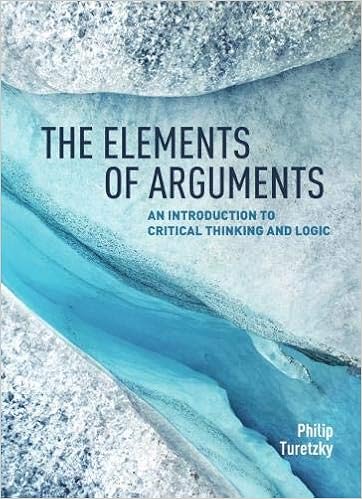
Much love and God bless.
Butch5
Active
- Joined
- Nov 13, 2019
- Messages
- 3,355
Thanks for the offer, but it's not necessary. I understand logic and logical fallacies. As I pointed out, I said nothing about spiritual gifts. It seems you've misunderstood what I said. I said eternal life was a gift from God. I didn't even use the word spiritual.I hear you say the(your) logic is fine my brother but I don't see you showing me in which way I have erred on my presentation of your position.
I don't mean this in a rude way, and I say this in love, but have you taken any courses on logic or reasoning before?
This is a great read here:
It was required text for my honors program at my undergraduate university.
Talks about reason, and logic, and logical fallacies, etc.
I think after reading it your discussions will be more fruitful. If you need the
money to purchase the book $40US, PM me and I'll gladly send it to you including shipping cost.
Love and God Bless.
Amazon.com: The Elements of Arguments: An Introduction to Critical Thinking and Logic: 9781554814077: Turetzky, Philip: Books
Amazon.com: The Elements of Arguments: An Introduction to Critical Thinking and Logic: 9781554814077: Turetzky, Philip: Bookswww.amazon.com
Much love and God bless.
Since you misunderstood what I said, your reply was not to what I said, but rather to what you thought I said. Since I didnt say that there is no point in addressing what you said.
Jesus_is_LORD
Loyal
- Joined
- Nov 10, 2015
- Messages
- 2,982
Thanks for the offer, but it's not necessary. I understand logic and logical fallacies. As I pointed out, I said nothing about spiritual gifts. It seems you've misunderstood what I said. I said eternal life was a gift from God. I didn't even use the word spiritual.
Since you misunderstood what I said, your reply was not to what I said, but rather to what you thought I said. Since I didnt say that there is no point in addressing what you said.
Thanks for the reply and clarification and the patience. Much appreciated. I also dislike when I'm misrepresented so
thanks for your patience with replying. Thank you.
I see here you said
"Paul said that the wages of sin is death and that the gift of God is eternal life. If someone is
going to be tormented in Hell forever, they must live forever. However, the gift of God, which is eternal life is given to believers not unbelievers."
Thanks, you are correct that you didn't say spiritual gifts there.
So if I understand you correctly what you are saying is:
(point) Eternal life is a gift from God
(point) Nonbelievers don't have the gift of Eternal life
(conclusion) Nonbeliever cannot life forever?
-------------------------------------------------
If that is what you are saying, the next step really would be to ask ourselves, what is this eternal life that
the Bible speaks off? How is it defined?
It seems that you are seeing or defining "Eternal Life" strictly as a matter of duration of life --not a quality of life which includes
many properties including (duration, joy, etc).
In doing so your point would be logically true, if you define eternal life as Paul puts it as only length of time. Because if you
don't describe it as length of time but a quality of life which includes properties (such as length of time, etc, etc), than your
premise would fall apart.
So for your premise to work, and it can. Eternal life would have to be defined strictly as length of time.
So let us take a look at what word Paul uses "aionios" and where else has it been used.

When I look at the definition I find that your position gains some support.
The definition of aionios is " age-long, and therefore: practically eternal, unending; partaking of the character of that which lasts for an age, as contrasted with that which is brief and fleeting. "
Then when I look further at the definition and places of usage that support seems to go away. What I read below shows that there is usage for quality
of life, and we see that same word used is used for eternal fire.


It seems in your statement you are looking at Eternal life as one phrase and it can be fair to do so.
However for the point your are trying to make and with the Greek, it seems you should separate Eternal and Life
and say Eternal-Life. And doing so you can also say Eternal-Fire or Eternal-death.
Notice above that the word for eternal and the word for life are different. This makes it two different words (Eternal- life)
not one word or a compound word.
Therefore the emphasis on the gift from God really is the Life. Not the duration of eternity.
Which is why the Bible says in 1 John 5:12 "Whoever has the Son has life; whoever does not have the Son of God does not have life." ( zóé: life )
The emphasis being the gift of Life (zoe). The same word for life used in the verse you reference.
Jesus_is_LORD
Loyal
- Joined
- Nov 10, 2015
- Messages
- 2,982
@Butch5 , when God created man in Eden He breathed into us the breath of life.
This truly was a gift. Is your position that those separate from God will have this life (breath of life from God)
taken away from them when they go to hell. Therefore they will cease to exist because God is life and without his breath of life they cannot exist.
Is that a fair support to your argument?
--Therefore after Sin in Eden instead of being born with this spiritual life we were born dead, and therefore the need to be born again.
Thus if one dies without being born again, they will eventually cease to exist because only the spirit of God, which Adam and Eve lost
for all there descendants (requiring each of us to be born again) gives eternal life.
Is that more support for your argument?
This truly was a gift. Is your position that those separate from God will have this life (breath of life from God)
taken away from them when they go to hell. Therefore they will cease to exist because God is life and without his breath of life they cannot exist.
Is that a fair support to your argument?
--Therefore after Sin in Eden instead of being born with this spiritual life we were born dead, and therefore the need to be born again.
Thus if one dies without being born again, they will eventually cease to exist because only the spirit of God, which Adam and Eve lost
for all there descendants (requiring each of us to be born again) gives eternal life.
Is that more support for your argument?
Butch5
Active
- Joined
- Nov 13, 2019
- Messages
- 3,355
Hi,Thanks for the reply and clarification and the patience. Much appreciated. I also dislike when I'm misrepresented so
thanks for your patience with replying. Thank you.
I see here you said
"Paul said that the wages of sin is death and that the gift of God is eternal life. If someone is
going to be tormented in Hell forever, they must live forever. However, the gift of God, which is eternal life is given to believers not unbelievers."
Thanks, you are correct that you didn't say spiritual gifts there.
So if I understand you correctly what you are saying is:
(point) Eternal life is a gift from God
(point) Nonbelievers don't have the gift of Eternal life
(conclusion) Nonbeliever cannot life forever?
-------------------------------------------------
If that is what you are saying, the next step really would be to ask ourselves, what is this eternal life that
the Bible speaks off? How is it defined?
It seems that you are seeing or defining "Eternal Life" strictly as a matter of duration of life --not a quality of life which includes
many properties including (duration, joy, etc).
In doing so your point would be logically true, if you define eternal life as Paul puts it as only length of time. Because if you
don't describe it as length of time but a quality of life which includes properties (such as length of time, etc, etc), than your
premise would fall apart.
So for your premise to work, and it can. Eternal life would have to be defined strictly as length of time.
So let us take a look at what word Paul uses "aionios" and where else has it been used.
When I look at the definition I find that your position gains some support.
The definition of aionios is " age-long, and therefore: practically eternal, unending; partaking of the character of that which lasts for an age, as contrasted with that which is brief and fleeting. "
Then when I look further at the definition and places of usage that support seems to go away. What I read below shows that there is usage for quality
of life, and we see that same word used is used for eternal fire.
It seems in your statement you are looking at Eternal life as one phrase and it can be fair to do so.
However for the point your are trying to make and with the Greek, it seems you should separate Eternal and Life
and say Eternal-Life. And doing so you can also say Eternal-Fire or Eternal-death.
Notice above that the word for eternal and the word for life are different. This makes it two different words (Eternal- life)
not one word or a compound word.
Therefore the emphasis on the gift from God really is the Life. Not the duration of eternity.
Which is why the Bible says in 1 John 5:12 "Whoever has the Son has life; whoever does not have the Son of God does not have life." ( zóé: life )
The emphasis being the gift of Life (zoe). The same word for life used in the verse you reference.
Jesus spoke of the end of the aion. The apostles also asked about the end of the aion. This tells me that Jesus and the apostles didn't understand aion as etrrnal, unending. Many modern commentators and theologians claim it means eternal. However, something cannot be both eternal and not eternal at the same time. That's a logical contradiction. It's my opinion that Jesus and the apostles had a much better understanding of the word aion than do our modern day commentators and theologians.
I don't see where the word aion indicates a quality of life. I see where it indicates a duration of life.
Jesus_is_LORD
Loyal
- Joined
- Nov 10, 2015
- Messages
- 2,982
Hi,
Jesus spoke of the end of the aion. The apostles also asked about the end of the aion. This tells me that Jesus and the apostles didn't understand aion as etrrnal, unending. Many modern commentators and theologians claim it means eternal. However, something cannot be both eternal and not eternal at the same time. That's a logical contradiction. It's my opinion that Jesus and the apostles had a much better understanding of the word aion than do our modern day commentators and theologians.
I don't see where the word aion indicates a quality of life. I see where it indicates a duration of life.
Thanks for the reply. I've enjoyed hearing your position and why you believe what you believe. Thanks for taking the time to share.
I agree with you that if something is a logical contradication you want to stay away from it.
However language is interesting isn't it. When we study linguistics we find that words can have different meanings
and definitions, based on the context. etc. etc. For example, in certain languages or cultures the meaning changes just
based on the tone or inflexion of voice, etc.
Put another way, One can say "yes , sure" and looking just at the definitions it means one thing, then if you are there in person
you can read by the persons tone that they are clearly being sarcastic when they say "Yes, sure". So you are on to something, language is definitely interesting.
Since many scholars continue to disagree on the usage of words. (For example some words are used one way at times and another at other times)
it seems helpful when we are trying to understand what something means to look at all the other factors. The person speaking, the audience,
the language, the context, and compare it to other things they said.
Thanks for taking the time to share your perspective, which differs from mine, but I'm glad to hear you explain why you believe what you believe.
Butch5
Active
- Joined
- Nov 13, 2019
- Messages
- 3,355
You're welcome and thank you too!. I agree with what you've said here. We don't have the luxury of hearing tone or voice inflection since we are reading these letters, I'm sure it would help if we did. I agree words can have different meanings. However, I don't believe they can have opposing meanings. Suppose we created a word "xyz" and we gave this word two definitions, yes and no. Then suppose someone asked, did you go to the store today, and I answered "xyz". The person questioning me has not gotten an answer to their question even though I answered. The reason is because my answer could mean yes or it could mean no. So they still don't know if I went to the store today. Such a word would be useless for communicating and that's what words are for.Thanks for the reply. I've enjoyed hearing your position and why you believe what you believe. Thanks for taking the time to share.
I agree with you that if something is a logical contradication you want to stay away from it.
However language is interesting isn't it. When we study linguistics we find that words can have different meanings
and definitions, based on the context. etc. etc. For example, in certain languages or cultures the meaning changes just
based on the tone or inflexion of voice, etc.
Put another way, One can say "yes , sure" and looking just at the definitions it means one thing, then if you are there in person
you can read by the persons tone that they are clearly being sarcastic when they say "Yes, sure". So you are on to something, language is definitely interesting.
Since many scholars continue to disagree on the usage of words. (For example some words are used one way at times and another at other times)
it seems helpful when we are trying to understand what something means to look at all the other factors. The person speaking, the audience,
the language, the context, and compare it to other things they said.
Thanks for taking the time to share your perspective, which differs from mine, but I'm glad to hear you explain why you believe what you believe.
Jesus_is_LORD
Loyal
- Joined
- Nov 10, 2015
- Messages
- 2,982
You're welcome and thank you too!. I agree with what you've said here. We don't have the luxury of hearing tone or voice inflection since we are reading these letters, I'm sure it would help if we did. I agree words can have different meanings. However, I don't believe they can have opposing meanings. Suppose we created a word "xyz" and we gave this word two definitions, yes and no. Then suppose someone asked, did you go to the store today, and I answered "xyz". The person questioning me has not gotten an answer to their question even though I answered. The reason is because my answer could mean yes or it could mean no. So they still don't know if I went to the store today. Such a word would be useless for communicating and that's what words are for.
Showing good logical reasoning here
 .
.I agree with your point that words can have different meanings but not opposite ones.
I agree with that point. You are correct about that.
But I don't think we are arguing about if eternal means eternal. I'm just saying that two words are used, Eternal and life,
and you are using them as if it is one word. But it is two (Eternal( aionios ) Life(Zoe)
I'm looking at it as if for example it was translated "Eternal Salvation" therefore someone can have Eternal Salvation while another gets Eternal damnation.
But it seems you are saying Eternal Salvation is one word, therefore if you don't have it, you cannot have any life that is forever. That is how
I see your argument.
Last edited:
Butch5
Active
- Joined
- Nov 13, 2019
- Messages
- 3,355
How would someone live forever if they don't have eternal life?Showing good logical reasoning here
I agree with your point that words can have different meanings but not opposite ones.
I agree with that point. You are correct about that.
But I don't think we are arguing about if eternal means eternal. I'm just saying that two words are used, Eternal and life,
and you are using them as if it is one word.
I'm looking at it as if it was translated "Eternal Salvation" therefore someone can have Eternal Salvation while another gets Eternal damnation.
But it seems you are saying Eternal Salvation is one word, therefore if you don't have it, you cannot have any life that is forever.
What I'm saying is that aion doesnt mean eternal. No matter what its connected with, life, damnation, etc. I beleive the best translation is "age".

PloughBoy
Loyal
- Joined
- Dec 2, 2019
- Messages
- 9,820
"Fantastic clip" you arranged and I sent a copy to my youngest DAUGHTER, Who will be 31 this month. Thank you.
I put together an excerpt from J.C Ryle's book on Holiness in which he talks about Hell.
This might help some. A little less than 10 minutes
PloughBoy
Loyal
- Joined
- Dec 2, 2019
- Messages
- 9,820
Is that not something, Throughout my years of knowing the "PRACTICES" of some churches. Putting people in charge of different positions in its body, and claiming them to have "spiritual gifts" who have not been "born from above!" to instruct and teach the "sons of GOD" about "GOD" the Father. And they don't even believe.Tell me more. I want to understand your more clearly.
Do you find that Christians are saying that unbelievers are expected to have spiritual gifts?
Members Online
- Members online
- 0
- Guests online
- 5,366
- Total visitors
- 5,366
Totals may include hidden visitors.
Trending content


Community Stats
- Threads
- 81,225
- Messages
- 478,585
- Members
- 13,048
- Latest Member
- Cailyn_ruby
- Active members today
- 22
- New members today
- 0
- New threads today
- 7
- New posts today
- 45